
Speaking at Oxford Brookes University’s Law School
12/2/20253 min read
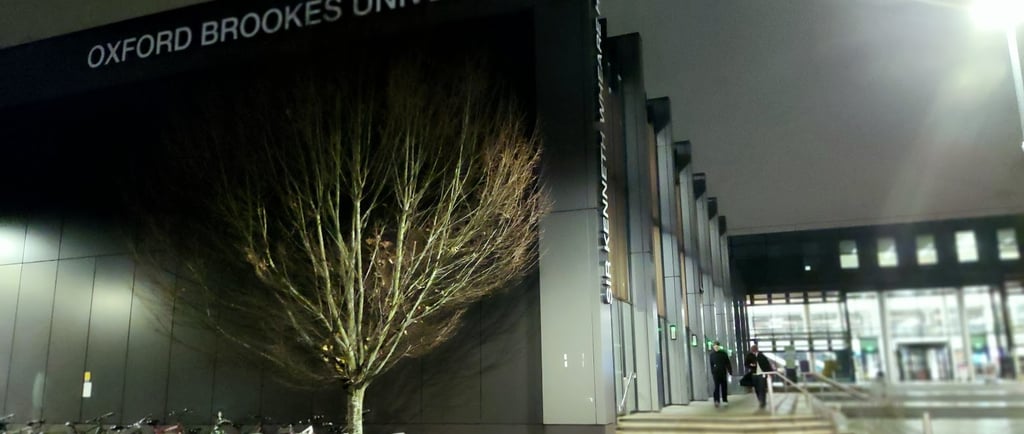
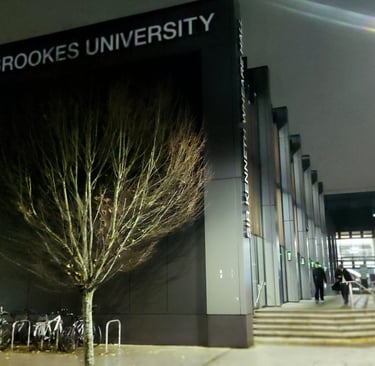
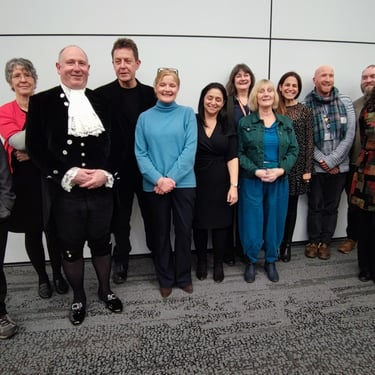
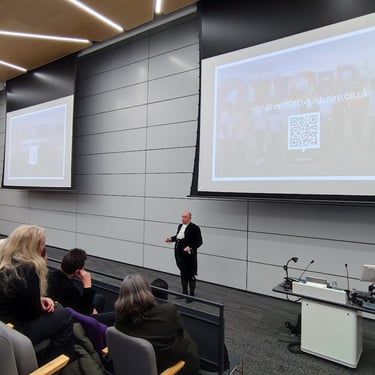
Last night I had the enormous pleasure of giving a lecture to students and staff at Oxford Brookes University’s Law School — a brilliant way to round off their semester, and a genuine highlight of my shrieval year so far. I was truly delighted to have been invited by Charlotte Houghteling and Marc Howe, whose enthusiasm for connecting legal education with real-world civic experience absolutely shone through.
The evening began with a real honour: I was introduced by the new Vice-Chancellor of Oxford Brookes, Professor Helen Laville. It’s always a privilege to meet a university leader at the beginning of their tenure — that moment when vision and possibility are so alive — and Helen’s commitment to renewing Brookes’ civic purpose was evident from the first words she spoke.
I was equally pleased to meet Professor Chara Bakalis, Head of the Law School, whose ambitions for her students and for the school’s civic engagement are impressive and deeply encouraging. The work her team is already doing to expose students to the realities of the justice system — and the essential role that charities and community organisations play in it — is outstanding.
My lecture — “Not That Kind of Sheriff: Law, Justice and Civil Society in the 21st Century” — explored the relationship between law, justice, civic organisations and the third sector. I spoke about the long history of the High Sheriff, and how a role rooted in royal authority has evolved into a bridge between institutions and communities. More importantly, I argued that while law keeps order, it is civil society — the charities, volunteers, youth workers, faith groups, community leaders — that keeps us human.
We discussed the distinction between law (the mirror of what society currently accepts) and justice (the map of what society believes ought to be possible). And we explored how charities hold power to account, meet unmet need, and make society civil in the truest sense of the word.
You can download a copy of my speaking notes from here.
As always, the most rewarding moments came through the questions and conversations afterwards. Brookes students are sharp, curious and engaged — genuinely interested in how justice evolves, how civil society shapes the national fabric, and how they themselves can contribute. The staff, too, were generous with their insights and reflections, weaving legal theory with practical experience.
I left the university thoroughly buoyed by the thoughtfulness and ambition of everyone I met. Oxford Brookes has always had strong civic roots, but it is clear that under Helen’s leadership, and with the Law School’s momentum, that commitment is deepening in important ways.
This morning, Helen sent me a wonderfully thoughtful note — the kind that reminds you why civic partnerships between universities and community institutions matter so much. She wrote:
“Your message about the value of civic organisations was absolutely in line with the work I have been planning since I arrived at Brookes, which is based on renewal of our civic purpose. I had just been reading that morning the biography of one of my predecessors, John Henry Brookes, and his belief in the importance of the contribution of universities to work in partnership to their civic and regional communities. It was really inspiring to hear your views on the importance of the volunteer and civic sector… I know our students and staff found it really inspiring.”
A generous message — and one that beautifully underlines the shared mission of civic universities and civic office-holders: to help shape a society that is fairer, kinder, and more connected.
My thanks again to Charlotte, Marc, Chara, Helen, and to every student and colleague who came along. It was a privilege to spend the evening with you — and encouraging to see a law school so deeply committed to the communities it serves.
The Oxfordshire Shrievalty
Championing justice and community across Oxfordshire
© 2026. All rights reserved.