
Hill End
Mud, Memory and the Next Hundred Years
2/25/20263 min read
This morning could not have been more beautiful. Clear blue sky. Proper February sunshine. The sort that makes you forget how saturated the winter has been.
The ground, however, had not forgotten.
Within minutes of arriving at Hill End, it was clear my shoes were not going to survive the experience. The paths were gloriously muddy, the fields unapologetically soggy. Lucy, the Centre’s Director, very kindly lent me a pair of wellies.
Green. Entirely sensible. Entirely practical.
Sadly not Thomas the Tank Engine. Nor The Gruffalo. A missed opportunity, I felt.
But perhaps entirely appropriate. Hill End has never relied on gimmick. It has always relied on something far more substantial.
This year marks one hundred years since the first children arrived here in 1926. For a century, generations of Oxfordshire children have climbed Wytham Hill, slept in cedar-clad dormitories, eaten outdoors, built fires, sketched leaves, paddled in water, and discovered that learning does not only happen at a desk.
It is difficult to think of another place in our county that has shaped so many childhoods. Hill End is an institution in every sense – protected in trust for the outdoor education of children, and woven deeply into Oxfordshire’s collective memory.
For me, it carries a very personal significance.
Forty years ago, in my first week training as a teacher at Westminster College in Oxford, I came here. I can still remember the sense of exposure – the wind on the hill, the vastness of the sky, the feeling of being slightly outside my comfort zone. Even then, I sensed that something important was happening in places like this.
Outdoor education is not an optional extra. It is transformational.
It builds resilience in children who doubt themselves.
It reveals leadership in the quiet.
It gives practical competence to those who do not always shine in traditional academic settings.
And here is the crucial point – when children return to school after experiences like this, their attainment improves. Their progress strengthens. They attempt more. They persevere longer. They believe they can.
Confidence is not a soft outcome. It is a foundation for achievement.
In a county rightly proud of its educational standards, we should never forget that attainment is built on self-belief as much as curriculum coverage. For the child who struggles with literacy but can lead a team building a shelter. For the anxious child who manages their first night away from home. For the child who has never known open space and suddenly realises they are capable of far more than they thought.
Places like Hill End quietly narrow gaps that statistics alone cannot capture.
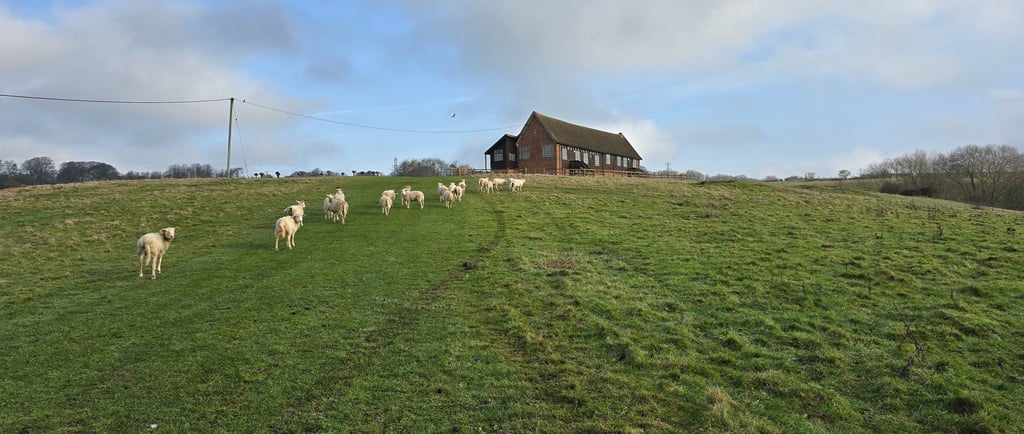
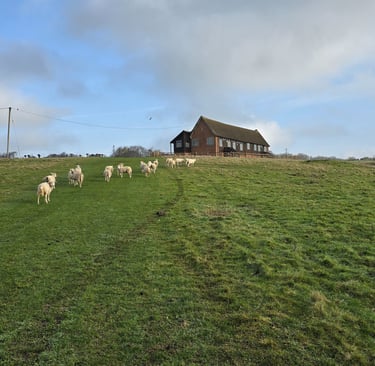
Walking the site this morning in bright sunshine – sheep grazing, snowdrops pushing through, woodland paths alive with birdsong – I was reminded why its founders believed so strongly in fresh air and immersion in nature. That vision was radical a century ago. It feels urgent again now.
We stood in the High Dormitory, with its cedar shingles and long rows of metal bedsteads. It is atmospheric. It holds a century of memory. You can almost hear the echo of excited voices in the rafters.
But the High Dorm now needs major renewal.
To bring it into the condition it deserves – safe, modern, sustainable and fit for the next generation – will require investment of around £1 million. This is not cosmetic work. It is essential if Hill End is to continue serving children for another hundred years.
There is something fitting about that in a centenary year. Celebration must sit alongside responsibility.
As I handed back my entirely sensible green wellies, I thought about the thousands of children who have walked those muddy paths before me. Many will have arrived uncertain. Most will have left taller.
Hill End has given Oxfordshire a century of confidence, resilience and possibility.
Now it asks something of us in return.
If we believe that outdoor education transforms attainment and life chances – and I do – then renewing the High Dorm is not indulgence. It is investment.
Investment in the next generation.
Investment in progress.
Investment in the young unheard of the next hundred years.
The Oxfordshire Shrievalty
Championing justice and community across Oxfordshire
© 2026. All rights reserved.