
Relational intelligence - hearing the young unheard
4/2/20264 min read
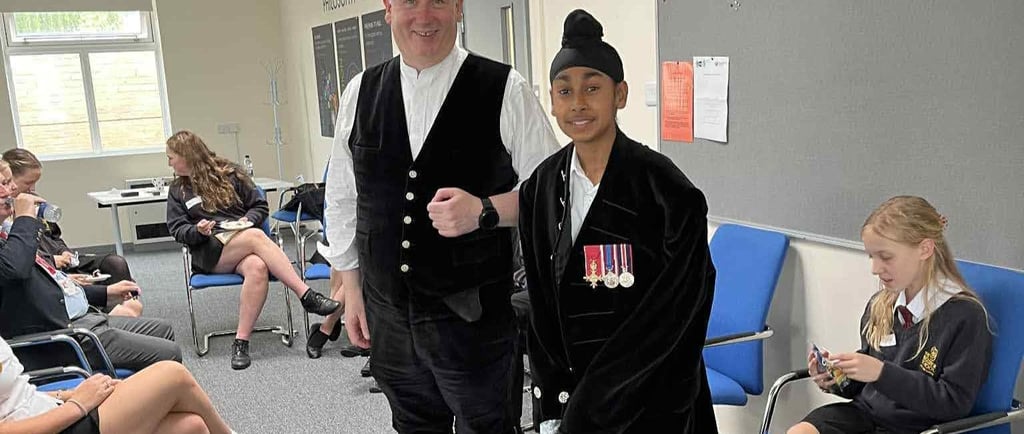
Over the past year as High Sheriff of Oxfordshire, one lesson has come through consistently: if we want to change outcomes for young people, we must start with relationships. That demands a different kind of attention, and a different kind of leadership.
Over the past year, as High Sheriff of Oxfordshire, I have worked under a simple theme: Hearing the Young Unheard.
At its heart, that is not a policy challenge. It is a relational one.
To hear a young person who feels unheard requires more than systems, services or strategy. It requires what we might call relational intelligence - the human capacity to listen well, build trust, notice what is going on beneath the surface, and help someone feel seen, safe and valued.
Relational intelligence is not about being nice. It is about being present, attentive and intentional in how we relate to one another. It is the ability to navigate difference, repair misunderstanding, and stay alongside people, especially when life is difficult or messy. It is what allows a teacher to reach a disengaged pupil, a youth worker to hold a young person’s trust, or a police officer to defuse a tense situation before it escalates.
We have always known this matters. But I suspect we are entering an age in which it matters more than ever.
As artificial intelligence reshapes many aspects of our lives, the distinctly human skills of connection, judgement and care become more valuable, not less. Machines may help us process information faster, but they cannot replace the experience of being genuinely known by another person.
During my year, I have spent time with schools, youth organisations, police officers, prison staff, charities, faith leaders, employers and community groups across Oxfordshire. Again and again, I have seen the same pattern. Lasting change rarely begins with a policy, a process or a platform. More often, it begins with a relationship.
It begins when a young person feels that somebody knows their name, notices when they are quiet, spots when something is wrong, and believes in them before they quite believe in themselves.
Yet too often our systems are designed around transactions rather than relationships. We measure activity, but not always trust. We count interventions, but not always connection. We fund programmes, but sometimes overlook the human glue that makes any programme work.
Over the past year, I have seen what relational intelligence looks like when it is given space to thrive.
I saw it in the Breakfast Conversations we held across the county. We brought together people from different sectors, often people who would not normally sit round the same table, and asked them simply to listen to one another about the lives of children and young people. What emerged was not just better information, but a stronger sense of shared responsibility. Schools, youth organisations, employers, police and health services began to see more clearly how interdependent their work is. None of us, on our own, can meet the complexity of young lives.
I saw it again at our county conference at BMW Group Plant Oxford. The most valuable moments were not always the formal presentations, but the conversations around tables. People listening carefully, challenging respectfully, and recognising that what feels like a marginal issue in one part of the system may be central somewhere else. That kind of convening builds the relationships on which better decisions depend.
I saw it last week in Banbury, at the launch of the Sun Fund. A local business initiative, already well in train, but very much aligned with the conversations we have been having across the county. It was genuinely encouraging to see employers stepping forward to create opportunities for young people - not just jobs, but pathways into work, confidence and possibility. Because in the end, life chances are shaped not only by qualifications, but by networks, encouragement, exposure and trust - by relationships.
I have seen relational intelligence at work in schools and colleges across Oxfordshire. Not in slogans, but in the daily, patient work of noticing, encouraging, challenging and staying alongside young people. Good schools create cultures of belonging. They help young people to feel seen. That matters enormously at a time when too many feel isolated or overlooked.
I have seen it in youth organisations, where trusted adults provide consistency, encouragement and care. Whether through Oxfordshire Youth, uniformed organisations or local grassroots groups, the pattern is clear. Young people flourish when they are known, expected, included and given room to grow. The relationship is not incidental to the work. It is the work.
I have seen it in policing, probation and the prison service too. The most effective professionals understand that authority without relationship is brittle. Prevention, rehabilitation and public confidence all depend on trust. The same is true in families and communities. Boundaries matter, but they are most effective when held within relationships that communicate dignity and care.
All of this matters even more at a time when loneliness and fragmentation seem to be increasing, particularly among the young. We are more connected digitally than ever before, yet many people feel less connected humanly. Technology can help us organise and inform, but it cannot replace the experience of being genuinely known.
That is why we need to think more seriously about what might be called relational infrastructure - the conditions that make good relationships more likely. Time, continuity, trust, shared spaces, strong community organisations, good mentoring, and leadership that values connection as much as efficiency.
This is not sentimental. It is practical.
If we want safer communities, we need stronger relationships around children before things go wrong.
If we want better educational outcomes, we need children to feel that they belong.
If we want healthier workplaces, we need cultures of trust rather than fear.
If we want stronger communities, we need places and habits that help people to meet, serve and understand one another.
As my year as High Sheriff draws to a close, I find myself more convinced than ever that early intervention is, at heart, relational work. We cannot spreadsheet our way out of loneliness or mistrust. We cannot automate belonging.
What we can do is choose to build lives, organisations and public services in which relationship is not treated as a soft extra, but as core business.
In Oxfordshire, I have seen enough this year to remain hopeful. I have seen people come together across sectors. I have seen organisations lean into shared purpose. I have seen adults take the time to hear the young unheard.
Relational intelligence is not a new idea. It is an old human wisdom which we urgently need to recover and revalue.
And in the end, it may be the difference between systems that function and societies that truly flourish.
The Oxfordshire Shrievalty
Championing justice and community across Oxfordshire
© 2026. All rights reserved.