
Listening, justice and the voices that matter
Reflections on the High Sheriff of Oxfordshire’s Law Lecture 2026
2/5/20262 min read
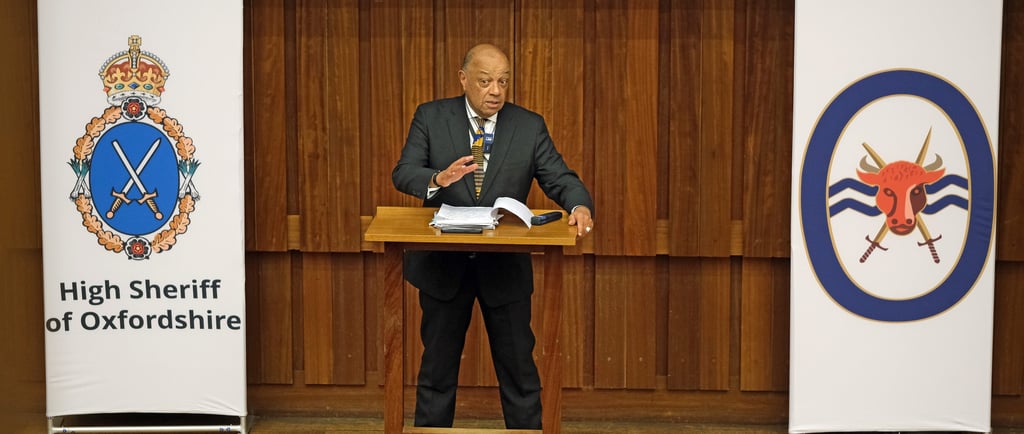
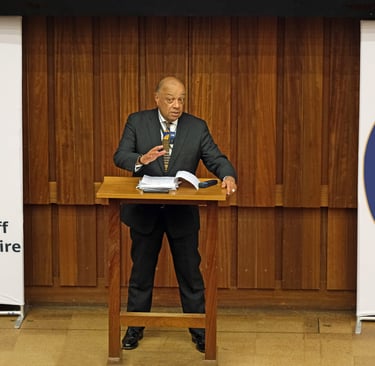
Tonight’s High Sheriff of Oxfordshire’s Law Lecture was one of those occasions that reminds me why this ancient role still matters.
We gathered in the Gulbenkian Lecture Theatre with a wonderfully broad mix of people – judges, lawyers, academics, public servants, volunteers, community leaders, sixth formers and university students. That diversity matters. Conversations about law and justice are at their strongest when they are not confined to a single profession or worldview.
The High Sheriff’s role is the oldest secular office in the country. Since 1066, Oxfordshire has had around 960 High Sheriffs. Most have held the office for a single year, shaped by the challenges of their time. I am very conscious that my responsibility is not to look backwards with nostalgia, but to use the office as a convening force – bringing people together to think seriously about justice as it is lived, not just as it is written.
This year’s Law Lecture could not have been better placed.
We were honoured to welcome Lord Paul Boateng as our lecturer. His career is remarkable in its breadth and significance – from being the first Black Cabinet Minister in the UK, to serving as Minister with responsibility for prisons and probation, and later as High Commissioner to South Africa. But what struck me most, as it always does, was not the list of roles, but the consistency of values that runs through his work.
Paul spoke with clarity and moral seriousness about justice, responsibility and listening. He reminded us that the law is not an abstract system operating at a distance, but something experienced – often painfully – by real people, particularly those with the least power. His reflections on prevention, early intervention and the importance of understanding lived experience resonated strongly with the theme of my year as High Sheriff: Hearing the Young Unheard.
There was a particular power in hearing these ideas articulated in a room that included so many young people. Too often, we talk about young people rather than with them. Tonight felt different. It felt like an invitation – to listen better, to take young voices seriously, and to recognise that justice begins not with policy, but with attention.
I was also reminded, on a personal level, of the years Paul and I spent working together through The Duke of Edinburgh’s Award, supporting young people across the UK and around the world. I have seen first-hand his belief in what young people can do when opportunity is offered with dignity and expectation. That belief was woven through his lecture.
For those who were unable to join us – or who would like to return to Paul’s arguments in more detail – the lecture is being transcribed, and as it was also filmed, we will be making a recording available on YouTube in due course.
My thanks go to the University of Oxford Law Faculty for hosting us so generously, to our sponsors and longstanding friends of the Shrievalty for their continued support, and to everyone who made the evening possible. Most of all, my thanks go to those who came, listened, questioned and reflected.
The High Sheriff’s Law Lecture exists to create space – space to think, to listen, and sometimes to be challenged. Tonight did exactly that.
And that, for me, is justice doing its quiet work.
The Oxfordshire Shrievalty
Championing justice and community across Oxfordshire
© 2026. All rights reserved.