
Hearing the Young Unheard
BMW Group Plant Oxford, Cowley – 4 March 2026
3/4/20263 min read
There are moments in a year as High Sheriff when a number of threads suddenly come together.
Today felt very much like one of those moments.
For the past twelve months my shrieval theme has been Hearing the Young Unheard. Not because young people lack a voice. Quite the opposite. Spend any time in schools, youth groups or community projects and you will find young people full of insight, questions and opinions.
The difficulty is rarely silence. The difficulty is that systems can be noisy, and sometimes the voices of young people struggle to cut through.
This morning, at the BMW Group Plant in Cowley, we brought together leaders from across Oxfordshire to reflect on what early intervention really means for the life chances of young people. We were enormously grateful to BMW for hosting us. Their welcome was more than hospitality. It was a reminder that businesses, alongside schools, public services and charities, all have a stake in belonging, opportunity and prevention.
Over the course of the year I have visited youth organisations across the county, spent time with policing, probation and prisons, and convened a series of Breakfast Conversations bringing together people who work directly with young people every day. Again and again a simple idea has emerged.
Early intervention is not a programme. It is a posture.
It is about noticing earlier. Acting earlier. Trusting community relationships before problems escalate into crisis.
The purpose of today’s conference was not to produce another report or to rehearse familiar statistics. Instead, we set out to create a space for reflection, learning and action.
Our first keynote, Catherine Johnstone CBE, Chief Executive of the Royal Voluntary Service, challenged a long-standing assumption that volunteering is merely a “nice to have”. Her argument was more radical than that. Youth volunteering, she suggested, is itself a powerful form of early intervention. When young people feel that they belong, when they are trusted with responsibility, when they are able to contribute to their communities, something profound happens. Confidence grows. Identity forms. The trajectory of a life can shift.
From there we moved into evidence and experience, hearing from practitioners and researchers who work directly with young people and families. The themes that surfaced were strikingly consistent: the importance of trusted adults, the role of community organisations, and the value of acting before problems harden into patterns.
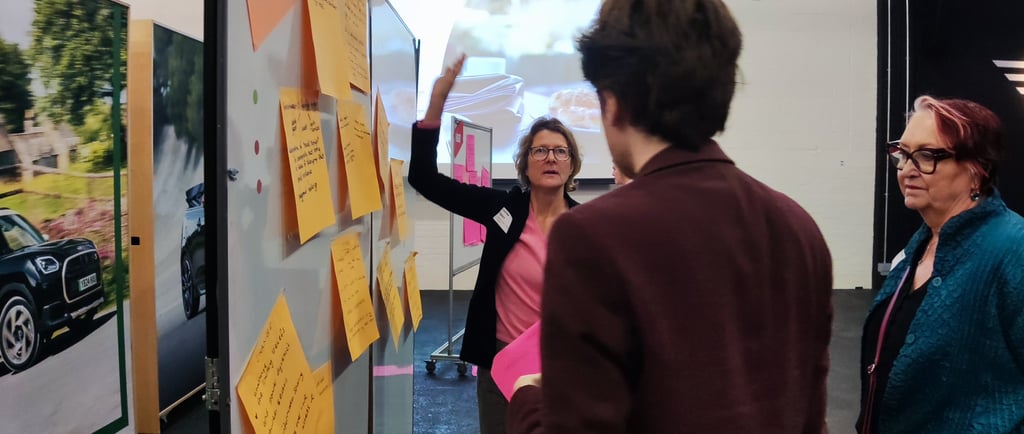
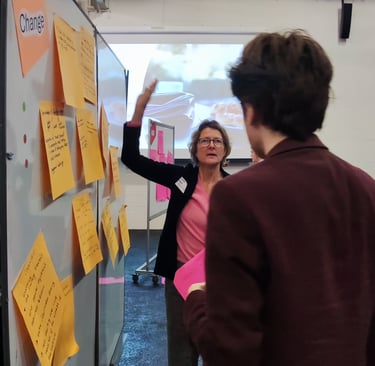
Throughout the morning the emphasis was deliberately on discussion rather than speeches. Participants worked around tables, sharing insights from their own sectors - education, policing, youth work, local government, health and the voluntary sector. The conversations were captured visually so that ideas could emerge organically rather than being squeezed into formal reports.
What became clear very quickly is that Oxfordshire already contains extraordinary commitment and expertise. Across the county there are people working quietly but powerfully to support young people: teachers, youth workers, volunteers, police officers, social workers, mentors and community leaders.
But what is often missing is connection.
The real opportunity lies in bringing these efforts together more intentionally. Schools understanding what youth organisations can offer. Police working alongside community mentors. Businesses recognising the role they can play in shaping aspiration and opportunity.
In other words, prevention is rarely the work of one institution. It is the work of a community ecosystem.
As the morning closed, the challenge was not simply to feel encouraged by the conversations, but to carry something practical forward. The intention is to reconvene many of today’s participants next year, to reflect on what has changed and what actions have followed.
If today proved anything, it is that Oxfordshire possesses both the goodwill and the wisdom to improve life chances for young people.
The question now is whether we can align those efforts early enough - and boldly enough - to ensure that the young people who most need to be heard are no longer unheard.
As ever, I left the room convinced of one thing.
If we listen carefully enough to young people, they will usually tell us exactly what they need. The real task is ensuring that the rest of us are prepared to act on what we hear.
The Oxfordshire Shrievalty
Championing justice and community across Oxfordshire
© 2026. All rights reserved.